I Ain’t Got Time to Bleed
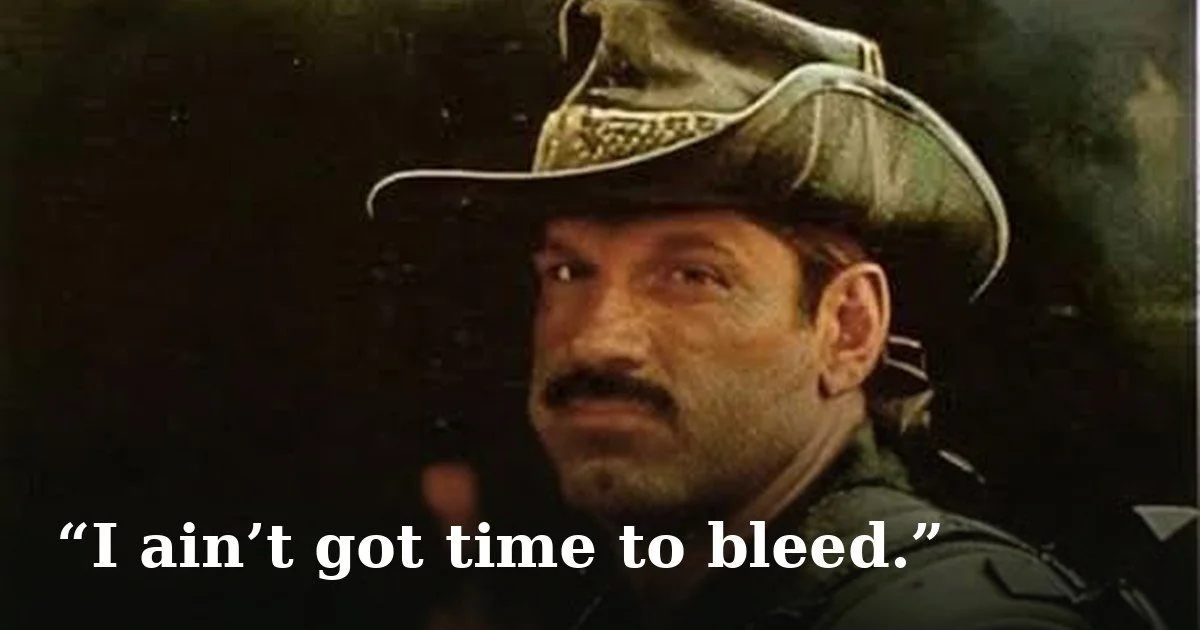
Predator was one of my favourite movies growing up, and still is today. Arnold Schwarzenegger in his prime, a team of hard-as-nails commandos, and something in the jungle that can pick them off one by one.
There’s a scene where Blain takes a hit from enemy fire. His teammate Poncho notices the blood and says, “You’re hit, you’re bleedin’ man.”
Blain, chewing his tobacco, barely looks down.
“I ain’t got time to bleed.”
I think about Blain a lot these days.
Not because I lace up my boots and paint my cheeks with camouflage while chewing tobacco, but because I see the modern equivalent in the guys I coach. Driven, successful men who’ve built their lives around being the person who gets it all done, no matter what.
Blain would fit right in.
He eats his lunch standing over the keyboard, mayonnaise smudged on the keys. He answers emails while driving, knees steering the wheel. He gets stuck in at the gym and legs it around a route close to his house. In the evening, he just about parks the madness long enough to listen to his kids.
He’s a good man, a reliable man. The man you want beside you when the shit hits the fan.
But somewhere along the way, he’s conditioned himself to believe that because he can keep going, he should. That because he can function on five hours’ kip, five hours will do. That sacrifice equals commitment, and that he’ll recover when the mission is complete.
But the mission never ends.
Blain’s line was “I ain’t got time to bleed.” The modern version is “I ain’t got time to rest.” It’s the same mentality in a different setting, and the bleeding just looks a little different now, showing up as a shorter fuse, broken sleep, and that feeling of being in the room with your family while your head is still in the Excel sheet.
In Predator, there’s only one man who survives the jungle and makes it out alive.
Dutch, played by Arnie.
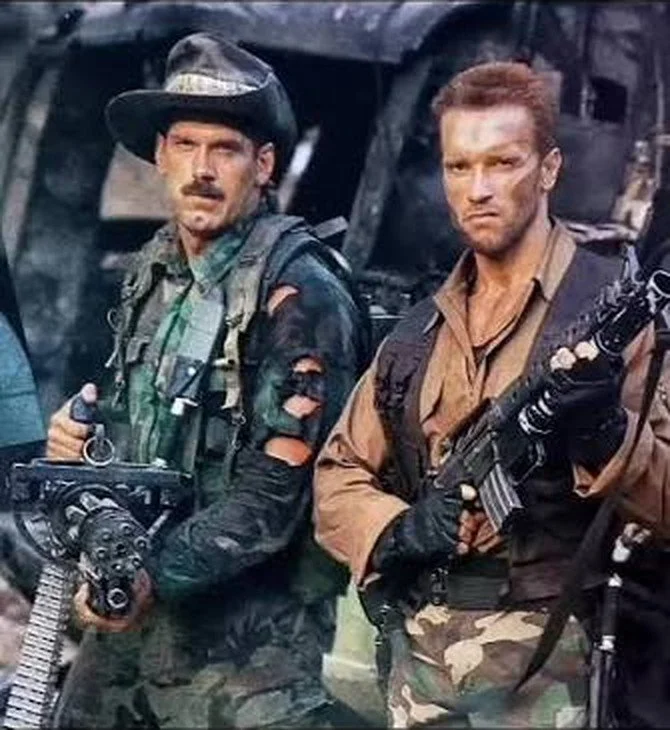
Dutch is every bit the soldier Blain is. He’s strong, disciplined, experienced and tough, and for every other mission those qualities have been enough, helping him lead his team, defeat enemies and get the job done.
But the Predator isn’t another man. It’s a different kind of enemy. He can’t overpower or outmuscle the Predator.
Dutch realises that what has always worked isn’t going to work here, so he changes tactics. He uses his mind, his surroundings and his ability to adapt. He covers himself in mud so he can’t be detected. He builds traps with what’s available to him. He doesn’t become less of a soldier, he becomes a smarter one.

The drive that got you this far isn’t the enemy. But when the old approach stops working, more effort isn’t always the answer. Sometimes you need to change tactics.
So what might the Dutch version look like? I’ve struggled with all of this for a long time and only recently started to pay real attention to it, because I felt like I was repeatedly hitting a wall. Here are a few things I keep coming back to, with the guys I coach and in my own week.
Warm up before you write it off
On the days you feel wrecked, it’s easy to write the session off before you’ve even started, telling yourself there’s nothing in the tank. But if you give it five to ten minutes of an easy warm-up first, more often than not the body wakes up and you get a decent session in.
On the days the warm-up confirms you’re flat, you can ease off, drop the load or go home knowing it was the right call rather than a lazy one. Some days the strength is in pushing on and some days it’s in easing off. The warm-up helps you make that call.
If you want the warm-up I use, it’s at the bottom of this article. It brings together breathing and mobility. It settles the mind, releases a bit of energy, and opens everything up. Even on the days you go no further, you’ve still regulated your nervous system and loosened up, and that’s a win on its own.
Turn down the volume
A lot of the tiredness we experience isn’t really the body, it’s that the head never gets to go quiet. There’s a podcast on in the car, the phone out while walking around the house, the lads’ WhatsApp group while loading the dishwasher, and a scroll in the bed before sleep.
You don’t need to roll out a mat and take up meditation to change it, it can be as small as a walk with no headphones, letting your eyes rest on something in the distance instead of a screen a foot from your face, or just sitting in the car for a couple of minutes before you go in the door.
It feels like you’re doing nothing, and that’s exactly the point, because that silence is often the only time your head gets to take a breather.
Those few minutes are also a good time to take a quick stock of the day, or the day so far. Where is my energy leaking? What’s causing the flatness? Is there anything simple I can do about it?
Make time for your mates
When life is chaotic, friends are often one of the first things to slide, because they’re not chasing you the way work and the family are.
I’m not going to tell you how to run your friendships, but I do honestly believe the downtime with people you like offers something different from sleep and a rest day on their own. They are your battery chargers.
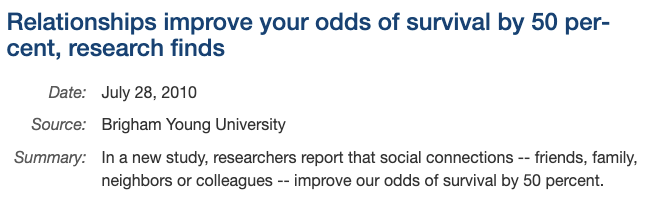
The biggest review of the research on this pooled 148 separate studies and found that people with strong social connections had roughly a 50% better chance of still being alive at follow-up than those without.
The same work put weak social connection on a par with smoking fifteen cigarettes a day, and a bigger risk to your health than not exercising or carrying extra weight.
It doesn’t have to be some huge planned event either. A couple of quiet pints, meeting up for a quick coffee, a chat on the phone, a sea and sauna combo, a stupid voice message or a GIF that makes you both laugh. Small as that sounds, it’s often the stuff that puts the week back in proportion.
None of this is about caring less. It’s about seeing that being there for the long haul takes a different kind of skill than getting through today.
The sets and reps, the protein, the 5K time, the intervals, they matter, but they’re just small details, and the real job is making sure there’s still something left in the tank for the people you’re doing it all for.
There’s nothing wrong with being Blain. He’s brave, he’s loyal, and he’s the man you want beside you going into battle.
But if we want to still be standing in twenty years, and still be good company for the people around us, we could do with a bit of Dutch. Not giving up the qualities that made you who you are, just being honest about when they’re not enough on their own, and having the sense to change tactics when you need to.
You don’t need to prove you can function on five hours’ kip.
You already know you can.
The question is why you keep insisting on it.
Stop the bleeding while you can.
My go-to warm-up
If any of this sounded familiar
I send out regular emails, with similar themes to this piece - what actually happens to your body in your forties, and what to do about it. If you want to receive them, just pop your email in below.
If you'd rather just talk, email me at gary@garybrownhere.com.
And if you've already decided you want to do something about it, that's what The Challenge is for. It runs for 4 weeks, and the next dates are on the page.
