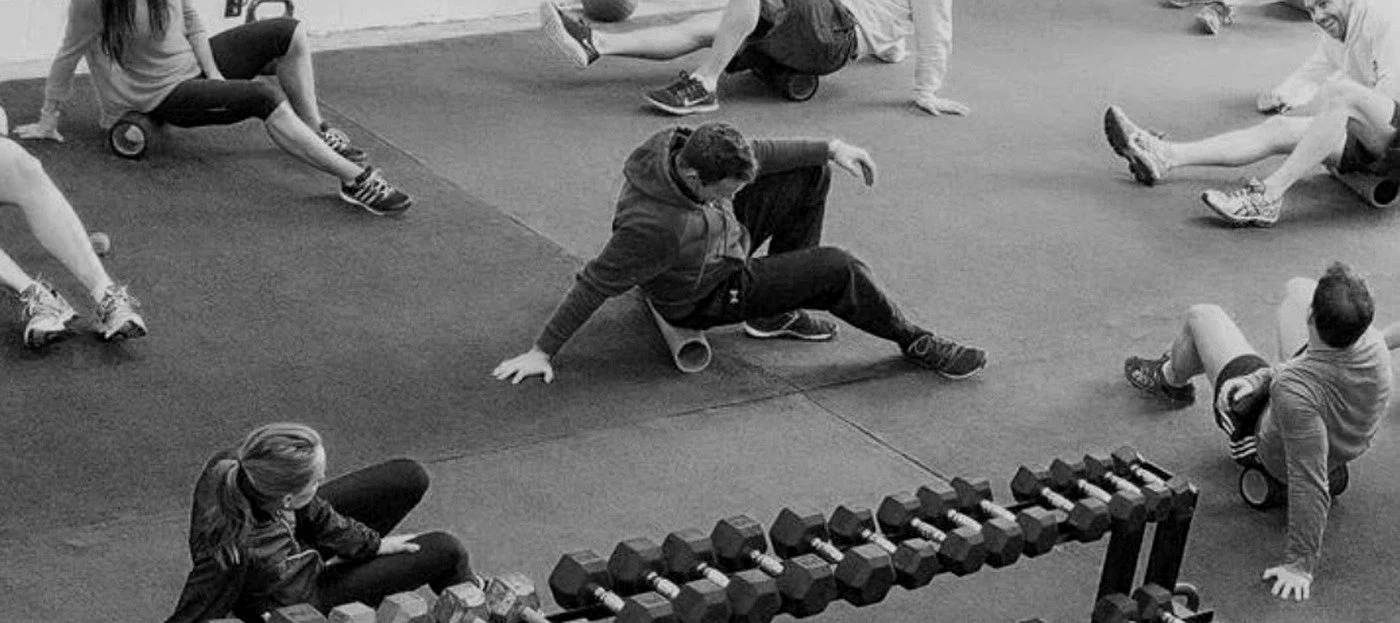
I began my coaching career in CrossFit, but to coach it, I needed a certification. At the time you couldn’t get it in Ireland, so a friend and I flew to New York.
We got there a couple of days early and did what two wannabe fit lads with something to prove always do. We decided the sensible way to prepare for a weekend of hard training was to go and do some hard training. There was a track nearby and a set of pull-up bars, so we invented a session on the spot, and went home buzzed.
Two days later we did the workout at the end of the certification. The next morning I woke up and I couldn’t straighten my arms.
I’d heard of rhabdomyolysis, the one where the muscle breaks down so badly you end up peeing something the colour of Coca-Cola. We’d been out in Manhattan the night before on the cocktails, which did nothing for my nerves as I stood over the toilet waiting to see what came out. It was grand. So I decided I was grand. I wasn’t. The elbows had swollen up like I had Popeye arms, but for the wrong reasons. This was the first of many mayday flares my body would send out over the next couple of years.
They settled after a few days and I got straight back into it, because that is what you do when there’s a leaderboard and an ego involved.
While I was coaching CrossFit, I was also finishing my physiotherapy degree. So I’d spend a few hours of the day learning how the body actually works, how joints and tendons need to be loaded correctly over time. Then in the evening I’d go to the gym and do the polar opposite to my own.
CrossFit and physiotherapy were like two different personalities living inside me. It was like trying to paint a picture with a calculator. Watching people rush in from a full day at a desk and start launching barbells over their heads with little grimaces on their faces, made me uncomfortable. It felt like I was doing some kind of insider trading and any minute I was going to get caught.
But the physio inside me would see someone wincing through a movement and I’d pull them aside. Drop the weight, leave that one out today, your shoulder’s trying to tell you something, listen to it. They’d listen, and they’d be the better for it. Then I’d finish coaching, pick up a barbell, and go do the very thing I’d just talked them out of.
There’s a name for this, I found out later. Solomon’s paradox, the one where we’re very good at giving other people advice and hopeless at taking our own. I was Gary Solomon.
It started with the shoulders. Pushing through clunky kipping pull-ups. Later that night I couldn’t lift my arms high enough to sniff my own armpits. But I ignored them and kept at it.
Then the elbows pepped up again. Lifting a cup of coffee felt like being shot by a sniper. Opening a door by the handle felt like a piranha bite, even though I’ve never been bitten by a piranha.
Then the lower back. I was deadlifting several times a week to chase a number on the bar. Driving home afterwards I’d get darting pain down my legs.
Then the Achilles. I’d seen everyone in the new minimal shoes looking perfectly fine in them, so I bought a pair and started running and box jumping in them. First steps out of bed in the morning, I could barely get my heels off the floor. If you were in the next room, you’d think I had dumbbells for socks.
Looking back now, it was so obvious. Just stop. Why would you keep doing the thing that is clearly hurting you? But in the moment there was always the other voice. Everyone else can do this, and they’re fine. So what’s wrong with me?
As Maverick was told in Top Gun, my ego was writing cheques my body couldn’t cash.
Some of the flares went off long before CrossFit. At sixteen I had keyhole surgery on one knee, a year later on the other, done by a brilliant surgeon. All that mattered to me then was running fast. He told me I’d nothing to worry about, and he was right. Though I suspect he left out the second half of the sentence. Nothing to worry about now but let’s catch up in thirty years.
Thirty years is roughly where I am now.
None of this is CrossFit’s fault. It’s a great concept for community and for getting people fit, the same as Hyrox, Tryka, a marathon, all of them. The exercise itself is rarely the whole story. It’s how you load it, how often you repeat it, and the body you bring to it.
So these days I select the exercises I know my body is comfortable with, the ones where I can feel the right muscles working. Same strength but without the flares.
First you learn the right movements for your particular body. Then the right dose.
Dose is simply how much, how often, and how long.
If a doctor prescribed you 5mg of something, you wouldn’t go home and take 20mg. Exercise is no different.
You can look up any exercise for any joint in seconds now, and AI will write you a perfect-looking programme by the time you open the wine bottle. But the exercises were never the secret. What you can’t look up is how your own body feels and responds.
For me, the biggest new load on my body this past year has been a baby. A newborn is a beautiful living smelly dumbbell that gets heavier every day and never once lets you lift it in a good position. Out of the car seat, down into the cot, into the buggy, hanging off one arm while you try to tie your laces with the other. It’s all loading, and it’s the kind nobody counts. If you’re a parent, you’ve probably felt it. One day the shoulder starts to get annoyed, then the elbow joins in, and you can’t figure out where it came from.
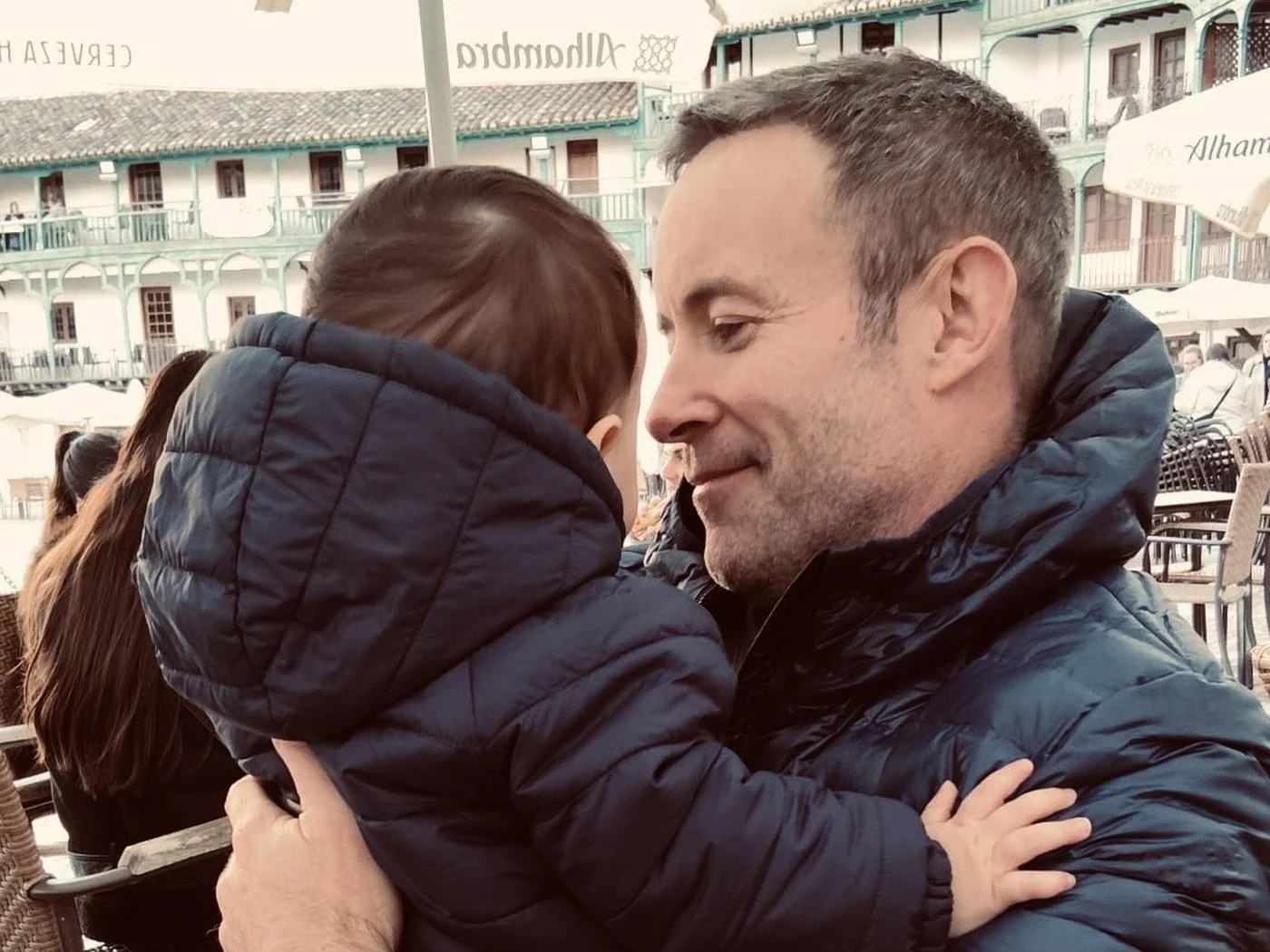
The gym might be where you notice the pain, but it often isn’t where you created it.
The rough rule I use is simple. Before increasing the dose, I want to see how the body responds during the exercise, a couple of hours later and again the following morning. If things are settling and staying manageable, we’re moving in the right direction. That’s the circle.
This is for ordinary aches of training. Sharp pain, anything shooting or nerve-like, swelling, or pain that wakes you at night is a different animal, and it needs looking at properly, not pushing through.
The longer I coach, the more convinced I am that recovery is the whole game and everything else is just detail. It starts with awareness. Learning to recognise how your body feels, how it responds and when it’s telling you to ease off. It’s a skill, and the more you practise, the better you get. It’s also the one thing I never did in the early years.
But the real problem starts in one particular moment. You catch yourself in the mirror, hair everywhere like you’ve been dragged through a bush, and you grab a fistful of the tummy, give it a shake, and think, right, enough of this marshmallow, let’s get stuck in. I’m going all out for the next few weeks and getting into serious shape. The fire’s back, baby, everyone get out of the way.
There’s something we never factor in at this point. The injury or life event that started all this made us back off, and backing off slid into weeks, then months, of barely training. The marshmallow grew. The body got stiff and lost its condition. So the body answering that call in the mirror isn’t the same as the one before. It’s probably heavier and more vulnerable before it has lifted a single thing or run a few steps.
That’s when we walk into the gym and reach for the weight we were lifting five years ago. We lace up and chase a 5K time we set when we were a different person with a different life, and then we act shocked when something lets go.
So take it right back. Put the gear in reverse and back up a little. What’s the rush? What’s the panic to dive straight into the deep end? Give the body that bit of time, that bit of room, that bit of freedom to remember what it can do. And then give it a little dose of something extra, just enough to say, we’re back in business.
Think how you’d handle it with your own child. They want to start running. You don’t sign them up for the London Marathon. You’d probably take them to the park, maybe run a lap beside them, point to a tree and tell them, out to there and back. You see the big smiling giddy face when they make it, and the two of you high five and go again the next day.
We should treat ourselves no differently. When your own fire comes back, walk into the gym the way you’d bring your kid, not the way you’d charge back in to impress some young fella beside you. Pick the movement that suits your body, respect the dose, and build from where you are today, not from where you were in a photograph.
And if you’re not sure where to start, or which exercises to leave alone, it helps to talk to someone who’s made every one of these mistakes himself.
Oh, hang on. Come to think of it, I might actually know a fella.
Drop me an email. Tell me what you’re dealing with, and let’s get talking.
Gary
Before you head off
If there’s anything about your health and fitness that’s bothering you or you’re struggling with, feel free to just drop me an email at gary@garybrownhere.com. I get back to everyone.
And if you've already decided you want to do something about it, that's what The Challenge is for. It runs for 4 weeks, and the next dates and info are here.
I also send out a weekly email on what actually happens to your body in your forties, and what to do about it. Drop your email in below.
